Enterprise Business Platform
Simorgh Business Solutions
A modular business management platform connecting shared enterprise services with operational domains.
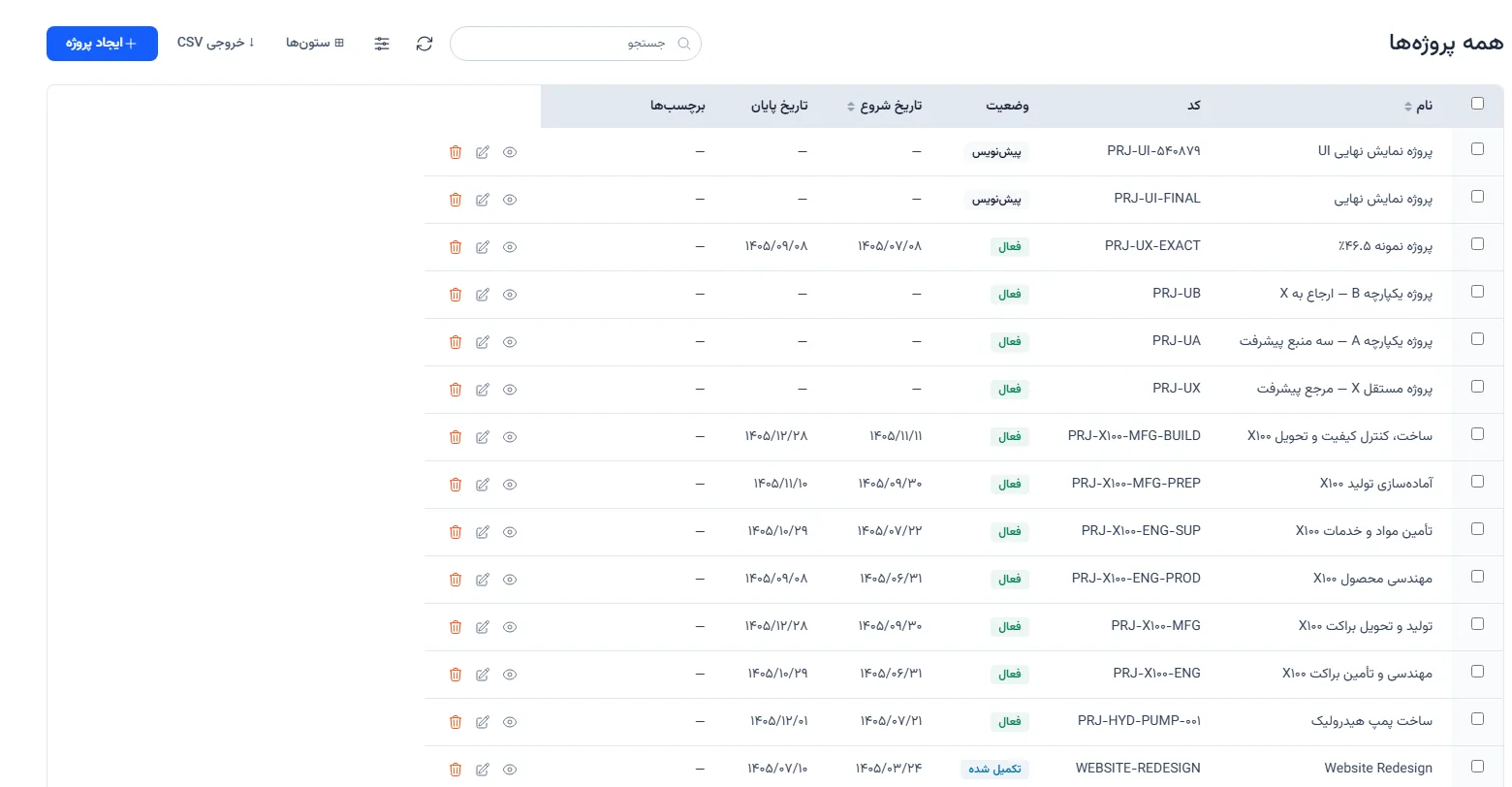
Overview
Simorgh Business Solutions is a modular business management suite intended to connect a shared platform foundation with enterprise applications. The direction is a Business Management Suite rather than a single ERP module: identity, organizational structure, permissions, workflow, configuration, application engines, and domain-specific solutions.
NEXA is a product identity associated with this work. The development, production, and marketing surfaces are distinct snapshots and should not be treated as interchangeable.
Origin and motivation
Operational data and processes are often spread across departments, systems, and spreadsheets. Integration becomes an afterthought, and every new domain repeats the same problems of identity, permissions, workflow, and reporting.
The platform direction addresses that fragmentation with shared services and a consistent domain model.
The problem
Enterprise teams need coherent records and processes across finance, projects, procurement, inventory, manufacturing, engineering, and workforce functions without rebuilding governance for every module.
Who it is for
Mid-size and large organizations with multi-department operations, complex approval paths, and a need for configurable enterprise software rather than isolated point tools.
Vision and objectives
One platform foundation with composable business domains, explicit module boundaries, and a customer-facing suite that can grow without duplicating core services.
Key capabilities
- Procurement chain: supplier, purchase request, RFQ, supplier quotation, bid evaluation, and purchase order
- Event-sourced inventory ledger with immutable transactions and balances
- Manufacturing engineering: MBOM, routing, work centers, and production orders
- Identity, role-based access, workflow, approvals, events, document management, and reporting
- Finance, HR/HCM, project, inventory, procurement, manufacturing, and engineering domains at different maturity levels
- Django/DRF platform engines with a React application surface
Engineering and architecture
The production and development repositories are separate snapshots. Development reports show many engine-level scoped suites passing, while a mandatory full regression and browser end-to-end freeze remain blocked by environment limits.
The platform uses Django and Django REST Framework, React, Celery, Redis, and shared authorization and configuration facilities. Presence of a route, model, or catalog entry is not treated as proof of end-to-end delivery.
Difficult problems and solutions
Breadth versus integrated readiness
Platform breadth is not the same as integrated readiness. Release confidence depends on explicit ownership, pinned revisions, tenant-aware test data, and a complete cross-domain acceptance path.
Tenant and role boundaries
Tenant and workspace scoping, organizational relationships, and role-based access are part of the implementation surface. Uniform isolation and full security assessment are not claimed.
Domain gaps
The production audit records missing or partial capabilities including sales contract, quality and inspection, final outbound delivery, payment request, BOM-to-PR bridging, and project closure.
Current status
The platform is broadly implemented and in production, with major functional gaps. The production delivery audit verdict is major gaps but deliverable. No certification, complete security posture, or full production equivalence is claimed.
The evidence-led case study records the detailed development and production snapshots, domain gaps, and validation boundaries.
Discuss Simorgh Business Solutions
If this work is relevant to your organization, start with the problem and the context.